Island life
La Lonja district
This is the city's Gothic heart. Reviews suggest visiting the Sa Llotja building (free and stunning) and then heading for cocktails in its narrow alleys. It’s more sophisticated and night-oriented than Santa Catalina. With such narrow streets, GPS can be glitchy. Use our link to the Antoni Maura Parking—it’s the closest one and puts you right at the entrance of the district.
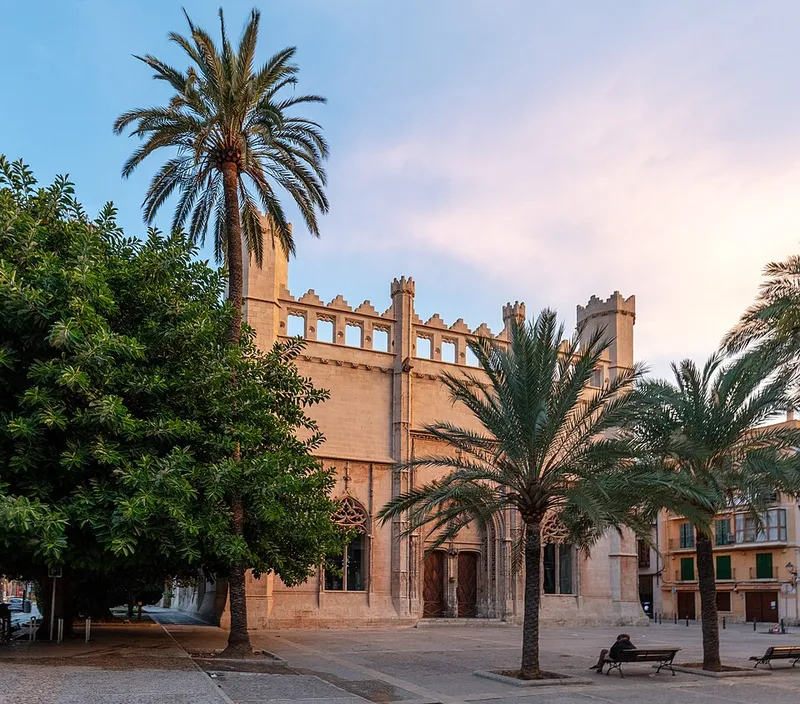
Sa Llotja, the old merchants' exchange, was built by Guillem Sagrera in the 15th century, and inside its spiralling columns hold up vaults that look like palm trees. Entry is free and a visit takes about twenty minutes, but it only opens when there's an exhibition and can close for weeks in between: if it's shut, the façade and the square are still worth the stop. Next door is the Consolat de Mar, and five minutes away the Es Baluard museum, on the city walls.
Don't drive in: most of the old town is made up of camera-controlled ACIRE streets, and entering without authorisation costs €200, even if your car has an environmental label. Leave the car in a public car park, such as Antoni Maura or Parc de la Mar, and walk along the promenade by the Cathedral. At night the atmosphere is in the streets between Plaça de la Llotja and the Born.
Frequently asked questions
Is Sa Llotja in Palma free to visit?
Yes, entry to Sa Llotja is free when it hosts an exhibition, and a visit takes about twenty minutes. Between exhibitions it may be closed for several weeks, so check before you go; the Gothic façade can always be seen from the square.
Can you drive into the La Lonja area of Palma?
It's best not to. Much of the old town is made up of camera-controlled ACIRE zones, open only to residents and authorised vehicles, with a €200 fine. Park in a nearby public car park, such as Antoni Maura or Parc de la Mar, and walk.
Updated in October 2026