
Practical
Mallorca with a dog (or cat): papers, getting there, beaches and what to know
The papers you need from the EU, Switzerland or the UK, which airlines and ferries take pets, which buses and trains they can ride, the dog beaches and what to watch out for.
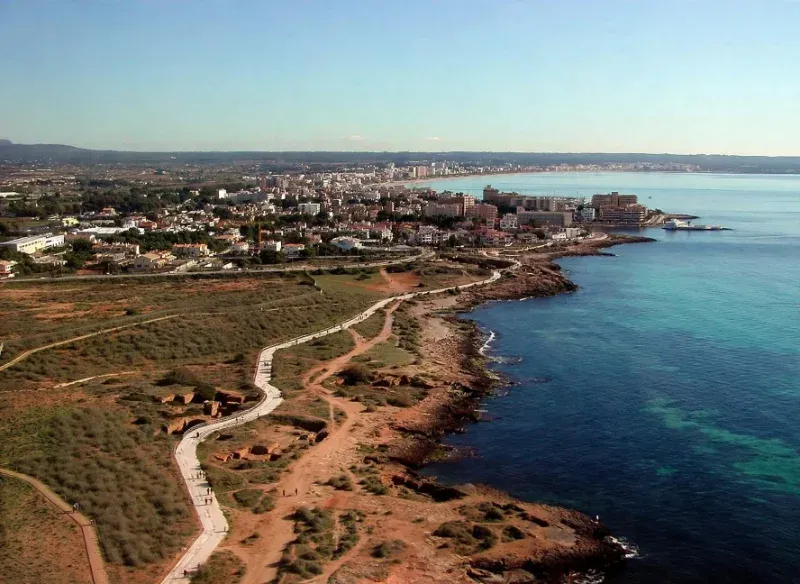
You can travel around Mallorca with a dog, but there is more to sort out than it seems: the right paperwork for the country you are coming from, a way of getting here that takes animals, and knowing where your dog can and cannot go, because on the island almost everything is decided town by town. This is what we checked, as of November 2026, on the official websites of the European Commission, the UK government, the transport companies and the town halls.
Paperwork: from the EU or Switzerland
For a dog, cat or ferret arriving from another EU country you need three things: a microchip, a rabies vaccination and an EU pet passport issued by an authorised vet. The vaccine can be given from 12 weeks of age, always after the microchip, and becomes valid 21 days after the first dose, so in practice the animal has to be about 15 weeks old. Spain does not require tapeworm treatment. Up to five animals per person count as a non-commercial move.
A new EU regulation with a new passport model came into force in 2026, but passports issued before 22 April 2026 remain valid. The Swiss pet passport is recognised just like the EU one, on the same terms.
From the UK: a certificate for every trip
If you live in England, Scotland or Wales, a pet passport is no good, even one issued in the EU (Northern Ireland is the exception). You need an Animal Health Certificate signed by an official vet no more than 10 days before you arrive in the EU. You need a new one for each trip, it covers up to five animals and, once you are in, it is valid for 6 months for travel within the EU and for getting back. Rabies works the same way: from 12 weeks of age and 21 days after the vaccination.
Arriving from outside the EU, you must come in through an authorised travellers' point of entry and show the animal and its papers to the Guardia Civil or customs, who scan the microchip. Before you book, check the Spanish Ministry of Agriculture's list to make sure the airport or port you are using is on it. To go back to Great Britain, your dog needs a tapeworm treatment given by a vet between 24 and 120 hours before arrival, so book a vet in Mallorca in good time. The UK–EU agreement on animal health that could simplify all this is not in force yet; the UK government talks about mid-2027.
Getting here: plane or ferry
Ryanair, easyJet and Jet2 do not carry pets, only assistance dogs. Among the airlines that do, the general rule is the cabin up to 8 kg, animal and soft carrier together: that is the limit at Iberia, Lufthansa, Eurowings, Condor and TUI fly. Vueling allows 10 kg including the carrier, cabin only; Air Europa, an animal of up to 8 kg and 10 kg in total. In the hold, Iberia takes dogs and cats of up to 45 kg with their crate and Air Europa up to 50 kg, but snub-nosed breeds (bulldogs, pugs, boxers, Persian cats…) do not go in the hold with Iberia or TUI fly: only in the cabin, if they fit. From Germany, Lufthansa and Eurowings require the animal to be at least 15 weeks old. Vueling does not carry pets on its UK flights, and Iberia and Air Europa do not take them in the hold on those routes either: from the UK, the usual way is by car and ferry.
By sea it is easier. Baleària, Trasmed and GNV, which link Mallorca with Barcelona, Valencia and Dénia, have cabins where your pet can stay with you, kennels on board and seats where an animal of up to 8 kg travels in its carrier. Your pet needs its own ticket and its papers in order. Pet cabins are few, so book them early.
Getting around: buses, train and metro
Since 7 June 2026, TIB intercity buses take dogs, cats, ferrets and small birds, always inside a carrier, one per person, on the floor or on your lap, never on a seat. On SFM trains and the Palma metro, microchipped dogs can ride in the last carriage and cats in a carrier; in a carrier they travel free and, if the dog does not fit in one, it pays a single ticket. Potentially dangerous dogs and females in heat are not allowed, and at rush hour staff can limit access. The Sóller train only takes animals in an approved carrier. If you depend on public transport, bear in mind that a medium or large dog will struggle anywhere but the train.
Beaches: it all depends on the town hall
There is no single rule in Mallorca: each municipality decides which beaches dogs can go on and when, and in bathing season almost every beach bans them. There are few areas set aside for them. Calvià has two, open from 8:00 to 20:00: Punta Marroig in Palmanova and Cala des Gats in Costa de la Calma. Inside, your dog can be off the lead, as long as you pick up after it and it is microchipped and vaccinated. In Palma, at Es Carnatge, between Cala Gamba and Can Pastilla, dogs can run free on the stretch from the Ninot de Cala Gamba to the bunkers. It is rocky, with no lifeguard or facilities.
The local press mentions other areas used for years, such as Cala Blanca (Andratx), Na Patana (Santa Margalida) and Llenaire (Port de Pollença), where dogs have been poisoned. Always read the signs. Out of season, several town halls let you walk dogs on all their beaches, but the dates vary from one municipality to the next. The fines are not symbolic: on Manacor's town beaches they range from 1,500 to 3,000 euros.
Mountains and nature areas
In the Serra de Tramuntana and on the Dry Stone Route (GR 221), dogs are welcome, always on a lead and under control. In Mondragó Natural Park too, on a lead and not on the beaches. They are not allowed, however, in s'Albufera de Mallorca, on the Llevant peninsula or on Cabrera, where landing domestic animals is forbidden. Bring water for both of you: in summer, the rocks get scorching.
Health: processionary caterpillars, leishmaniasis and heat
The pine processionary caterpillar is the biggest danger at the end of winter. According to the Balearic government's forest health service, in Mallorca the caterpillars come down from the pines to bury themselves mainly from late February to early March, although they have been seen from the second half of January. Their hairs cause severe reactions if a dog sniffs or licks them: in those weeks, avoid pine woods or keep your dog on a lead and away from the lines of caterpillars.
Leishmaniasis is spread by a sandfly found all over the island, from the coast to the mountains. If your dog comes from an area where it does not exist, ask your vet about a repellent collar or spot-on before the trip and do not leave the dog outside at night. In summer, walk early or late: the tarmac burns.
In an emergency, AniCura Aragó Hospital Veterinari and Hospital Veterinario Canis Mallorca in Palma are open 24 hours; so are Hospital Veterinari Ciutat d'Inca in Inca and MiVet Mallorca Veterinaris in Manacor.
The rules that apply to you too
Spain's 2023 animal welfare law applies to whoever is in charge of the animal, holidaymakers included: a dog cannot be left alone for more than 24 hours in a row (a cat, more than three days), or shut in a car in the heat. The law provides for compulsory third-party insurance for every dog, but it will not be required until its regulation is published, and as of November 2026 it still has not been. For potentially dangerous dogs (pit bull, Rottweiler, Akita Inu, Dogo Argentino and others) the rules have applied since 2002: in public, a muzzle and a short lead under 2 metres, one dog per person, with a licence and insurance. In towns, dogs go on a lead: in Palma, the local police issued 291 fines in 2023 for dogs off the lead.
For eating out, in the GetMallorca app the places that welcome dogs carry the «Dog-friendly» label; many terraces accept them, but ask before sitting inside.
Sources (43)
- food.ec.europa.eu
- food.ec.europa.eu
- blv.admin.ch
- gov.uk
- gov.uk
- gov.uk
- mapa.gob.es
- easyjet.com
- jet2.com
- help.vueling.com
- iberia.com
- aireuropa.com
- lufthansa.com
- eurowings.com
- condor.com
- tui.com
- balearia.com
- trasmed.com
- gnv.it
- tib.org
- trensfm.com
- trendesoller.com
- calvia.com
- csmpa.palma.es
- ultimahora.es
- ultimahora.es
- ultimahora.es
- fundaciomallorcaturisme.net
- caib.es
- caib.es
- caib.es
- caib.es
- caib.es
- diposit.ub.edu
- esccap.org
- anicura.es
- canismallorca.es
- unavets.com
- mivet.com
- boe.es
- selectra.es
- boe.es
- ultimahora.es